Riviera Dream Vision – Fashion Itineraries. Stories, Codes, Imaginaries 75 years of “Made in Romagna” fashion on display By Saroj Ali
By Saroj Ali – Zonemoda Team
What does it mean for a coastline to become a fashion system?
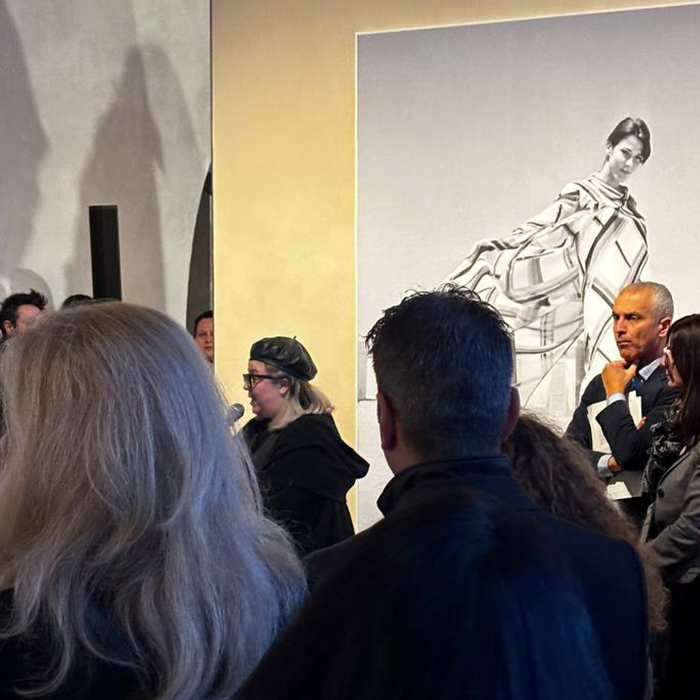
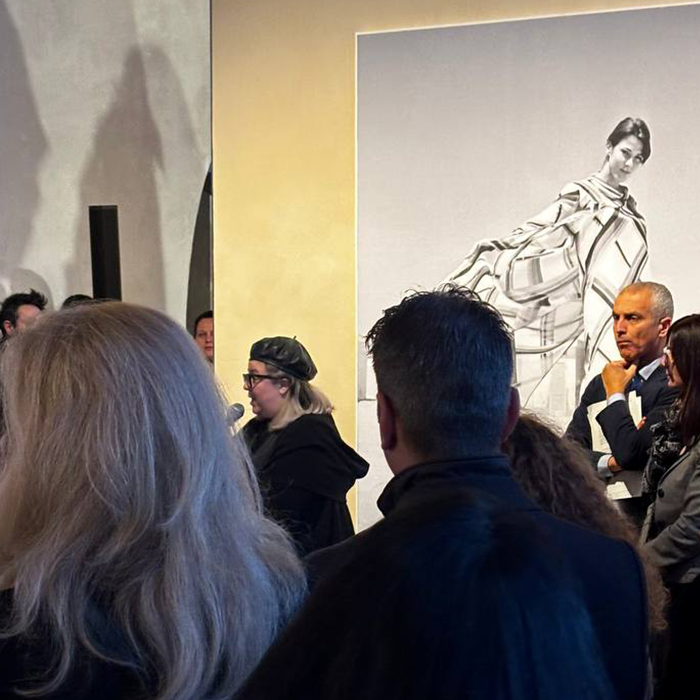
With the Riviera Dream Vision exhibition and its Stories, Codes, Imaginaries, the Riviera has become a symbolic geography that can be seen through its seventy five years of creative production rooted in Romagna and projected onto the international fashion system.
The Riviera has always been a stage, a projection and a promise, going beyond being just a coastline.
The exhibition, hosted from 20th February till the 24th of May within Palazzi dell’Arte of Rimini, constructs an analytical narrative of the district that is often condensed into the expression, ‘Made in Romagna’. Rather than celebrating brands in isolation, it maps the relationships between workshops and corporations, archives and runways, memory and media circulation.
Through this, a cultural infrastructure emerges shaped by the shoemaker, the knitter, the seamstress and later by industrial organisation and global branding strategies.
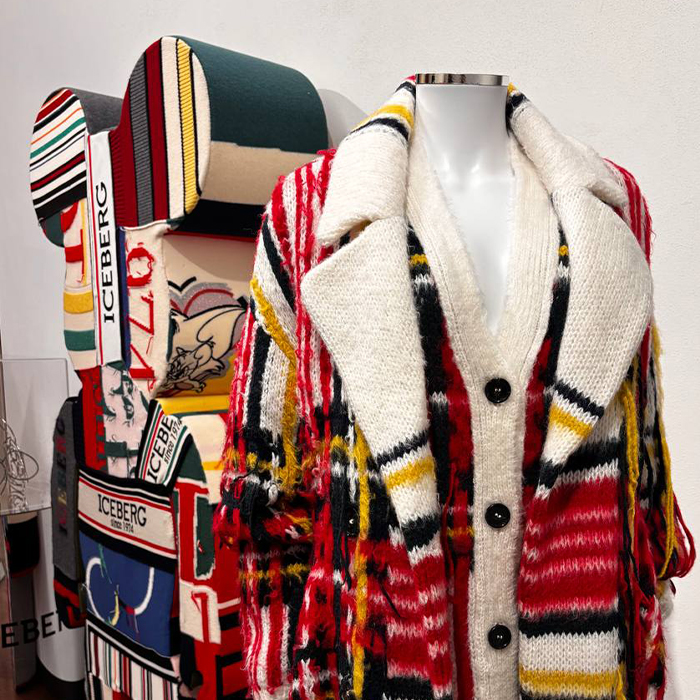
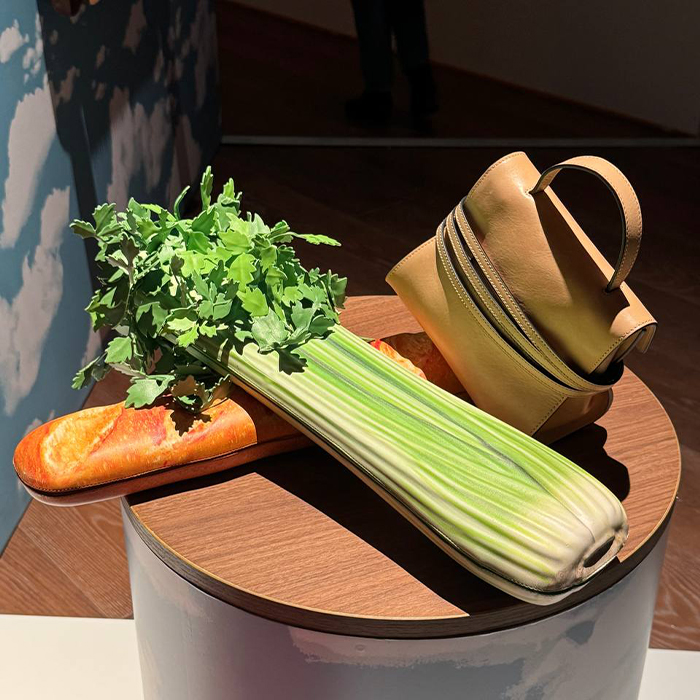
This exhibition has brought together garments, footwear, sketches, textile samples, colour charts, editorial materials, videos, immersive technologies and archival documents from various historic brands. Among them, the knitwear experimentation of Iceberg, founded with the Gilmar Group, is presented through looks, original sketches and various photographs that demonstrate a dialogue with art and graphic language.
The research by Moschino with the Aeffe Group is expressed through emblematic silhouettes that stage irony as both a structural code and a decorative gesture.
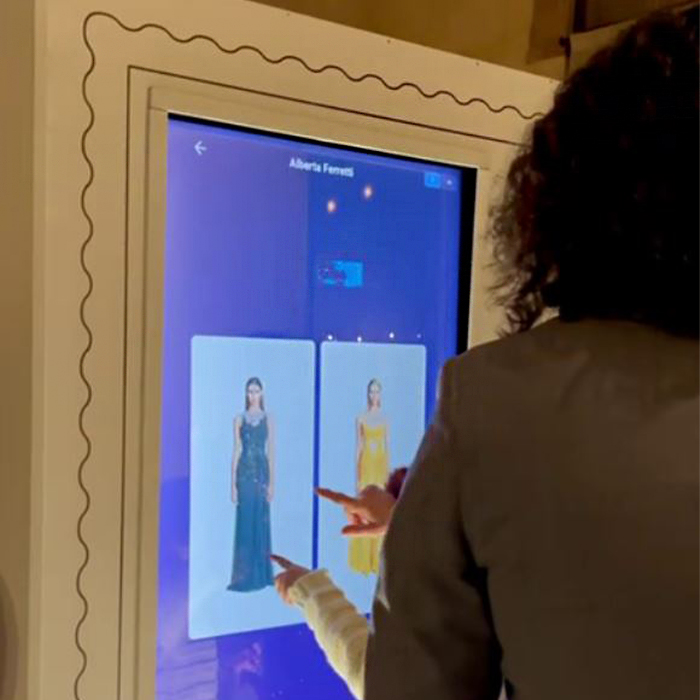
This exhibition also showcases various looks from Alberta Ferretti, who showcased her runway in Rimini in 2023, taking Rimini into an international atmosphere which exemplifies the dialogue between local formation and global affirmation.Among the many things, footwear occupied a central position, reflecting the productive excellence of the San Mauro Pascoli district.
Among the many iconic shoes by Giuseppe Zanotti are displayed, including the boot created for the ‘Bad’ video by Michael Jackson and the one created for Beyoncé Knowles. These pieces act as case studies in how local craftsmanship entered the global pop iconography.
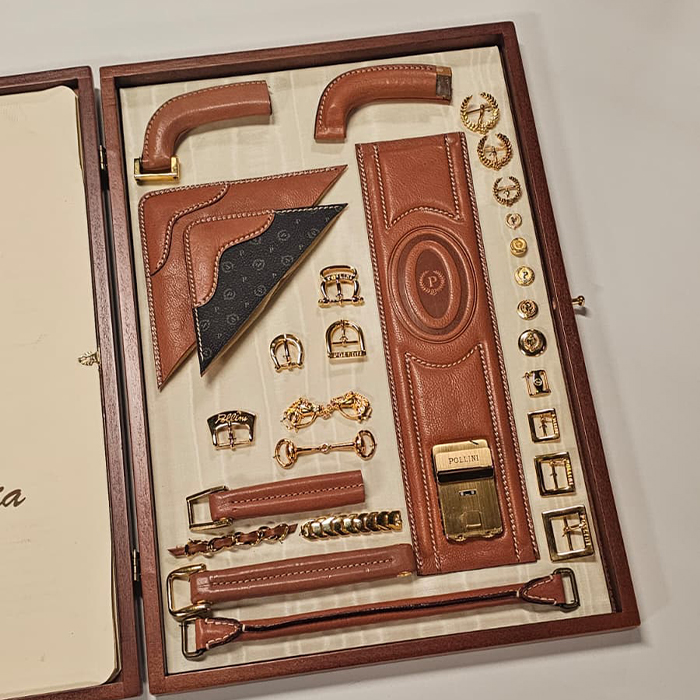
Alongside iconic pieces, the exhibition also highlights the artisanal knowledge associated with leather goods and La Pelletteria, which underscores the technical intelligence embedded in materials and construction. Alongside, the presence of brands such as Baldinini, Casadei, Gianvito Rossi, Pollini, and Sergio Rossi articulates a district system in which individual authorship is inseparable from territorial expertise.
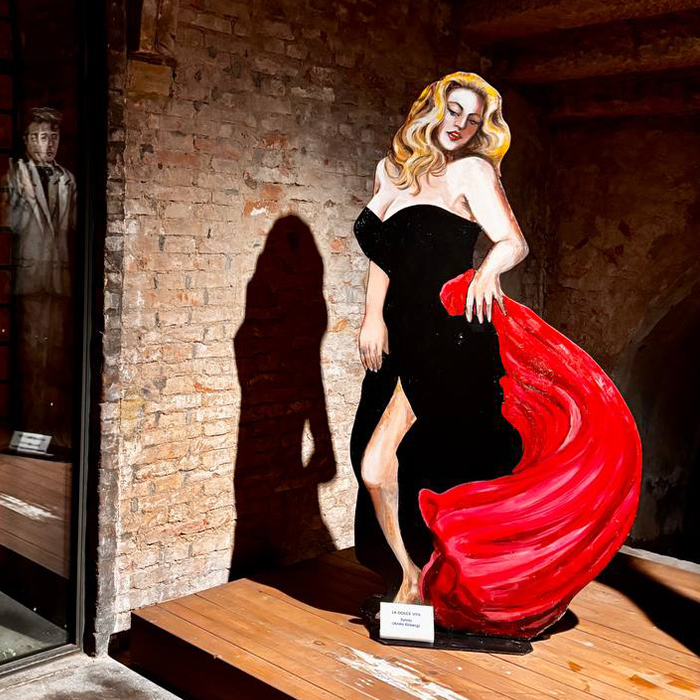
We can’t talk about Rimini without talking about cinema, and so, a dedicated section pays homage to Federico Fellini.
As the fiftieth anniversary of Casanova approaches, the original costumes designed by Danilo Donati are exhibited from the Fellini Museum archive.
This showcases that film and costume go hand in hand as costumes are constitutive to the visual architecture of the film.
The dialogue between fashion and cinema reveals how Rimini operates as an imaginative reservoir in which memory, artifice, and spectacle converge.
This curatorial structure is conceived and coordinated by Katia Bartolini and curated by Chiara Pompa, with the contribution of the research centre Culture Fashion Communication of the Department of Arts of the University of Bologna, which unfolds the exhibition along two trajectories:
- ‘Identity and Memory’ investigates the structural bond between brands and territory, tracing genealogies of skill and entrepreneurship.
- ‘International Vocation and Media Imagery’ examines the circulation of fashion through art, music, cinema, and entertainment, supported by materials from the Gambalunga Library Photographic Archive and the Rimini Film Archive.
Additionally, the exhibition extends into immersive experimentation. Through digital installations, visitors engage a virtual try-on system that generates a photorealistic avatar wearing selected garments against iconic settings of Rimini. Another installation digitises historic footwear models in three dimensions, activating audio-visual environments that resonate with Fellinian atmospheres. The spectator becomes participant, constructing a personalised postcard titled ‘A memory from Rimini’. Technology here amplifies the fashion item’s narrative capacity and repositions the body within the archive.
Crucially, Riviera Dream Vision operates as an educational device. Conceived as a case history for educational activities connected to cultural and fashion studies in Rimini, it consolidates research, documentation, and critical reflection on the district.
For those of us working within the intellectual ecosystem of the University of Bologna and engaging through platforms such as Zonemoda, the exhibition offers a methodological proposition. It demonstrates how fashion can be examined as a cultural infrastructure in which imagery, production, territory, and media converge.
Thus, through this exhibition, seventy-five years of Romagna fashion are presented as an interwoven system of stories, codes, and imaginaries. The Riviera emerges as a cultural syntax that continues to write itself across garments, screens, archives, and bodies. In this sense, ‘Made in Romagna’ is not a slogan. It is an evolving language.
 Previous Post
 Next Post